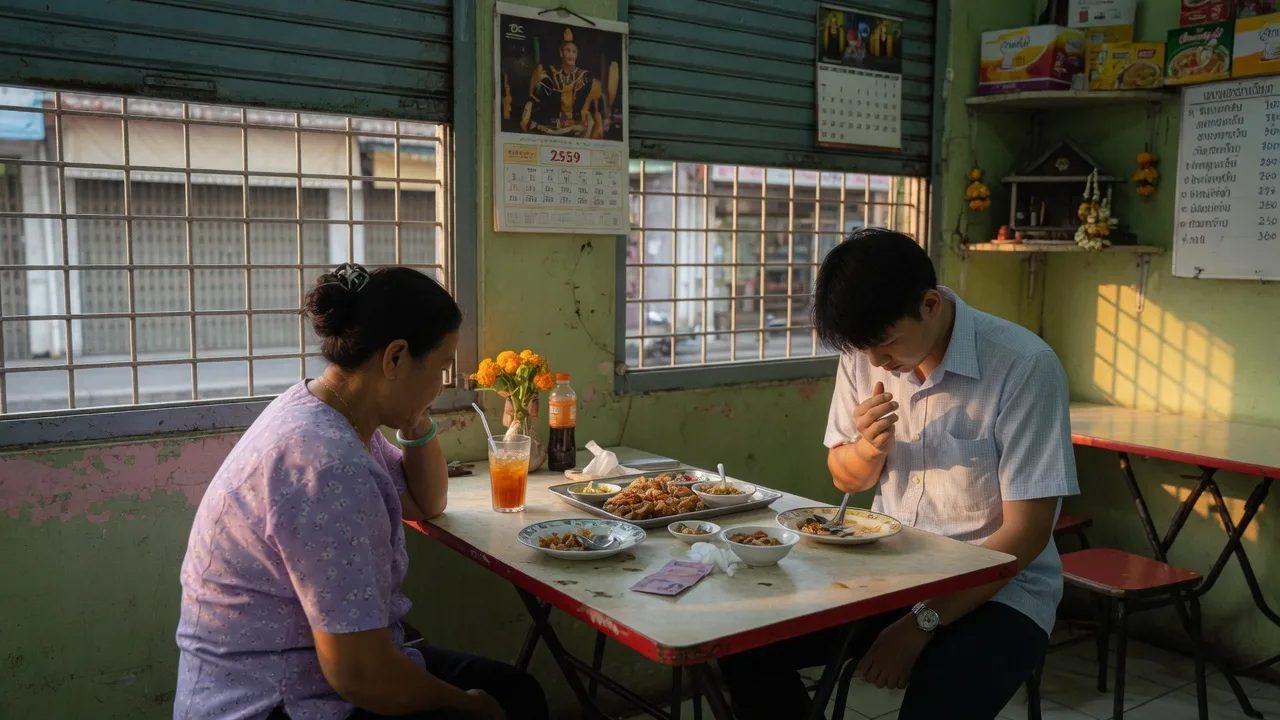
Kreng jai (เกรงใจ) is consideration that looks like hesitation: not wanting to trouble someone, not taking the last of something, not contradicting a host in front of their staff. It is the social grease of a hierarchical, face-conscious culture. Visitors who treat it as “Thais are too polite to be honest” miss the point. The honesty is there. It is routed around the person who would lose standing if it were said out loud.
What it is, and what it is not

Kreng jai is not shyness, and it is not a tourist slogan. It is a trained reluctance to impose — on a boss, a guest, a monk, a customer, a younger sibling who is hosting you. The person who kreng jai would rather absorb a small inconvenience than create one. The person on the other side is supposed to notice and refuse to let them absorb it. When both sides play, nobody is a martyr. When only the visitor plays, you get the spectacle of a foreigner insisting they are “fine on the floor” while the host dies inside.
It is also not mai pen rai. Mai pen rai lets a spilled drink go. Kreng jai is why nobody mentioned the drink was going to spill. Face (naa) is the third term: public contradiction costs naa. Kreng jai is one of the techniques for not collecting that cost.
English “just be honest with me” sounds like a gift. In a Thai workplace it can sound like “please embarrass yourself in this meeting.” Ask in private. Offer a ladder, not a spotlight.
How you will meet it

A smile instead of “no.” A delay instead of a complaint. A taxi driver agreeing to a route he will then quietly adjust. A guesthouse owner saying the room you want is “maybe tomorrow” when it is occupied tonight. A colleague who will stay late rather than tell you the brief was late.
Service kreng jai is the one visitors over-read. A waiter who will not say the kitchen is out of gai yang is not lying for sport. They are avoiding a no. You can help: offer two dishes, or ask “which of these do you still have?” Closed questions that still leave dignity work better than “tell me the truth.”
Family kreng jai is heavier. A younger relative will not contradict an aunt at the table. You, as the guest, should not recruit them as a translator of family politics. Eat, compliment the rice, let the argument happen in Thai.
Workplace kreng jai is why your “any questions?” at the end of a briefing gets silence. Questions come later, one-to-one, after the senior has left. If you need a decision in the room, name the options yourself and ask which to take — do not demand a critique of the boss’s idea from the people who report to her.
| Situation | What kreng jai looks like | A better move |
|---|---|---|
| Last piece of fruit | Nobody takes it | Split it, or the host serves it |
| Wrong dish arrived | Smile, eat around it | Quiet word, not a speech |
| Taxi route | “Yes” then a detour | Pin the map; thank them for the correction |
| Hotel problem | “Never mind” | Specific, calm, private |
| Meeting | Silence after “any questions?” | Ask individuals after, or offer A/B |
| Invitation they cannot take | Vague “see” | Offer a rain check they can accept later |
What not to do
Do not reward kreng jai by pushing harder. Volume is not clarity. A calm, specific request — “Could we have still water, not sparkling?” — is easier to grant than a lecture about customer rights.
Do not perform your own kreng jai as a bit. Refusing every offer until the host is distressed is not cultural fluency; it is another imposition. Accept the first or second offer of water. Leave a little rice if you are full, not a theatrical clean plate that forces a refill.
Do not use kreng jai as a theory of why you were overcharged. Sometimes you were overcharged. Pay, or don’t, on the number — not on a folk sociology of the stall.
Related ideas, used accurately
Sanuk — it should have some life in it. A meeting, a queue, a temple fair: if there is no sanuk, people disengage. This is not an excuse for chaos. It is why a grim efficiency lecture falls flat.
Mai pen rai — let it go. Not “nothing matters.” The motorbike that cut in is not a thesis. The passport left at the hotel is.
Jai yen — a cool heart. The person who stays even is the adult in the room. The person who needs to win the argument on the soi is not.
The wai — a greeting and a status marker. You do not have to wai first at a 7-Eleven. You do return a wai from someone older, and you do not treat it as a high-five.
For the rest of the social map see Thai social structure. For shoes, wai, and public manners on the road, Gateway keeps the practical list: Etiquette guide.
A working practice for visitors
- Make requests specific and small.
- Ask privately when the answer could embarrass.
- Accept hospitality without a three-act refusal.
- Leave people an exit — “if it’s difficult, we can do tomorrow.”
- Do not announce that you have read about kreng jai. Just use it.
You will still misread rooms. Everyone does. The repair is a lighter apology and a change of tack, not a speech about your research.
Next
Thai social structure, Temple etiquette, Etiquette on Gateway.