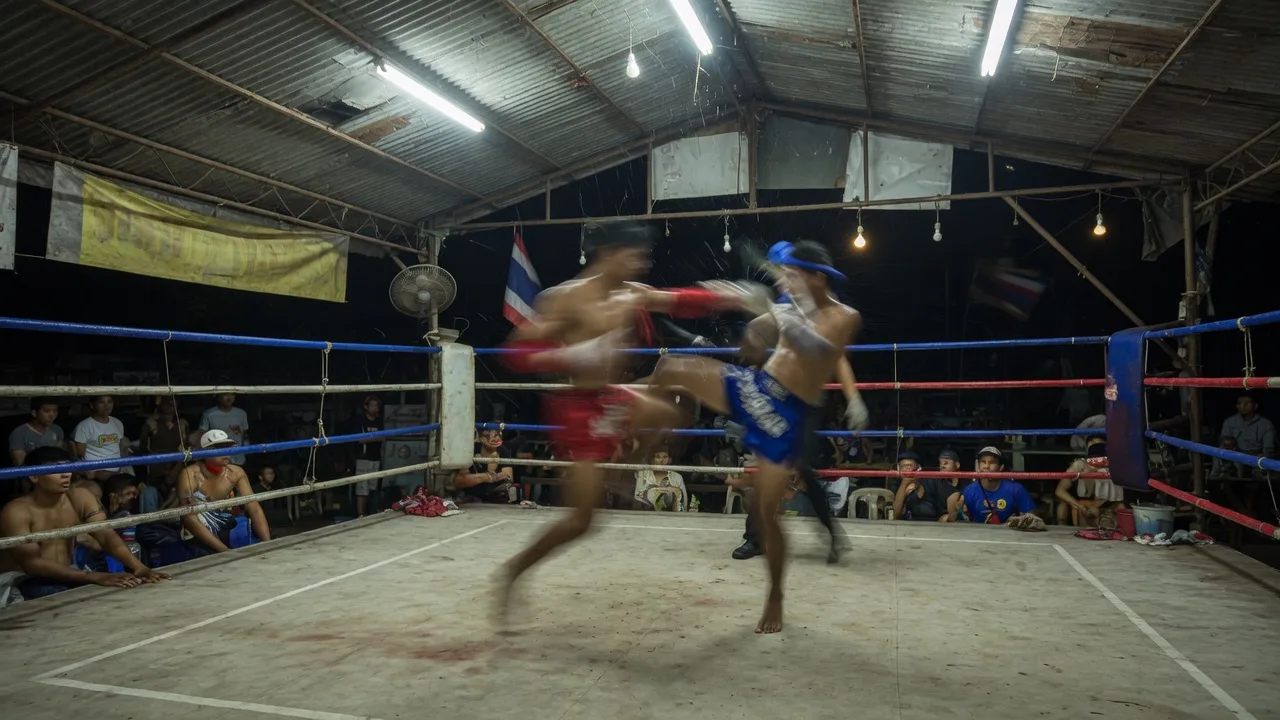
Muay Thai (มวยไทย) is the national sport, a striking art that uses fists, elbows, knees, and shins — eight points of contact — and a cultural institution sitting next to Buddhism and the monarchy in how people talk about Thai-ness. Ritual, live music, and a path out of a poor district are not extras. They are the sport.
History, without the movie version
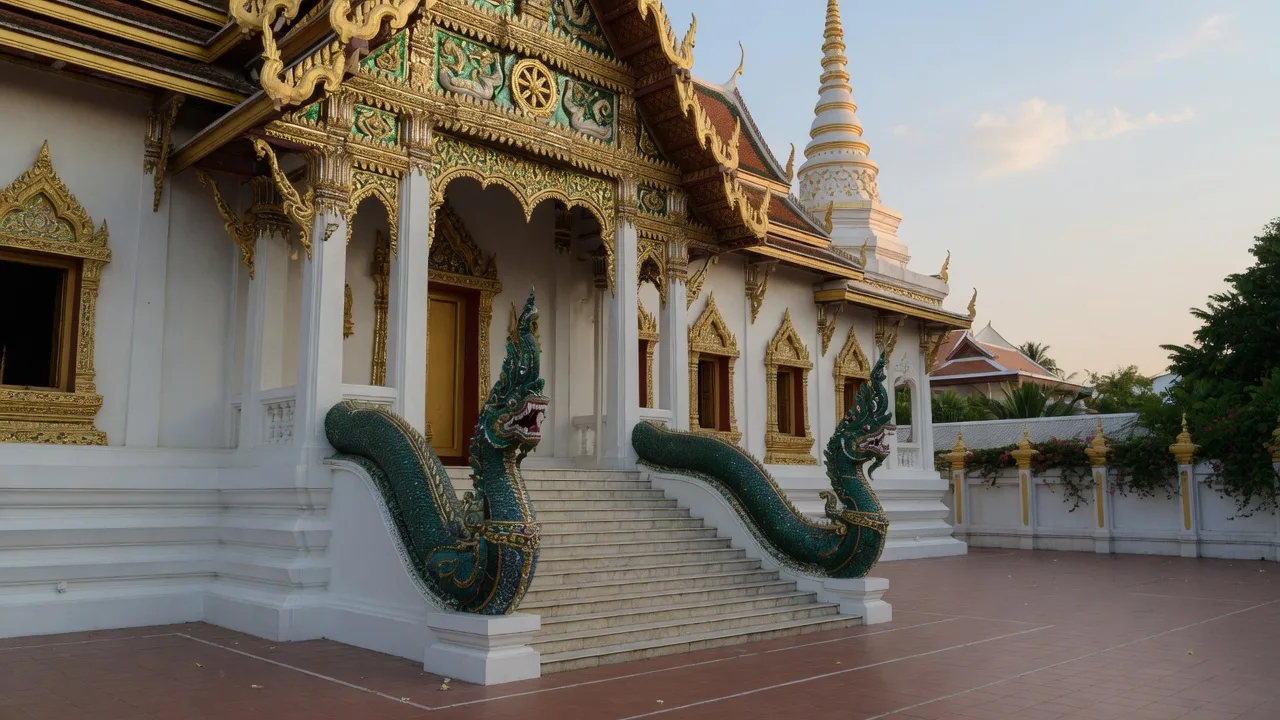
Origins are argued. Battlefield technique, royal entertainment, then rules. The legendary Nai Khanomtom — a captive said to have beaten ten Burmese champions after Ayutthaya’s fall — is the father figure. National Muay Thai Day is 17 March.
- Ayutthaya: war art and court
- Rattanakosin: rules; rope wraps, then gloves from the 1920s
- Modern: rounds, weights, Bangkok stadiums as the top of the pyramid
Eight limbs
| Weapon | Job |
|---|---|
| Fists | Boxing tools; less central than in the West |
| Elbows | Short range, cuts, knockouts — the signature |
| Knees | Clinch; body and head |
| Shins | Roundhouse with the shin, not the foot — among the harder strikes in combat sport |

Clinch (plam): standing grapple, neck control, knees and throws. Missing from most kickboxing. A good clinch fighter can end a round without looking busy.
Scoring (Thai style): clean technique and balance; knees and kicks over punch volume; who owns the space; who finishes stronger. One elbow can outweigh twenty jabs. Do not watch it like the Olympics.
Ritual
Every fight starts with Wai Kru Ram Muay:
- Seal the ring — ropes, prayer at corners
- Three bows — Buddha, Sangha, teacher
- Ram Muay — camp-specific dance: warrior, animal, spirit. Some graceful, some aggressive
It warms the body and names the lineage. Not a pre-show for tourists, though tourists are sitting there.
Music: pi java (reedy oboe), klong khaek drums, ching cymbals. Tempo rises with the fight. Incense plus that sound is why stadium Muay Thai does not feel like a basketball game.
Mongkon — blessed headband, on for the Wai Kru, off before the bell. Pra jiad — arm bands, on for the fight, protection in the belief system. Do not treat them as merch.
Stadiums
Rajadamnern — founded 1945, the world’s first purpose-built Muay Thai stadium, the prestige house, monarchy-adjacent. Typically Tue, Wed, Thu, Sun evenings. Open betting by hand signals. The music, the best Thai names.
Lumpinee — named for Lumbini, the Buddha’s birthplace. Opened 1956, moved from downtown to Ram Intra (north Bangkok) in 2014. Typically Tue, Fri, Sat. Historic rival. A Lumpinee or Rajadamnern belt was, for decades, the career.
| Bout pin | Figure |
|---|---|
| Rounds (stadium) | 5 × 3 minutes, 2 minutes rest |
| Gloves era | 1920s (replacing rope wraps) |
| Mini-flyweight | 105 lb and up from there |
| National Muay Thai Day | 17 March (Nai Khanomtom) |
| UNESCO ICH | Inscribed 2024 — still a fight, not a pageant |
Tickets: verify at the window; we will not invent a 2026 ringside SKU. Gates often open an hour before the first bout; the card builds toward the main event. Dress is ordinary; a linen scarf is irrelevant here and essential at tomorrow’s wat — scarf listings are colour and size menus, so this stays a search. Bangkok.
Training
Morning 06:00–08:00: 5–10 km run, pads, bag, clinch. Afternoon 15:00–17:30: drills, sparring, 1,000 kicks is not a metaphor some days. Fighters often start at 6–8, first bouts 10–12. Camp (kai muay) is house, school, and sangha-adjacent family.
Visitors
Chiang Mai (looser), Phuket (Tiger Muay Thai and peers — intensive), Bangkok (near the stadiums), Samui (beach plus bruises). Typical walk-in often 300–500 THB a session, or 8,000–15,000 THB for a week of unlimited — verify with the camp. Many bundle beds.
| Pin | Figure |
|---|---|
| National day | 17 March |
| Rajadamnern founded | 1945 |
| Gloves era | 1920s |
| Session (visitor, often) | ฿300–500 — verify |
| Week unlimited (often cited) | ฿8,000–15,000 — verify |
| Kids’ first fights | often 10–12 |
Insurance, ankles, tap water: Gateway Health and safety. Do not scooter to camp on day one. Packing.
Identity
Champions still come from poor rural camps. The international boom (MMA, UFC, ONE Championship) is an export. It does not make a stadium fight a theme park. Stay for the Wai Kru. Do not yell the way you yell at football. Sanuk and respect can occupy the same row. Betting is part of the room at Rajadamnern; it is not a requirement for a seat. Thai social structure.
Muay boran is the older battlefield/theatre form — longer namings, different rules, the thing tourist shows sometimes mean when they say “ancient.” Stadium Muay Thai is the sport with rounds, gloves, and a card. They share a bow. They are not interchangeable nights out.
Art that is not a ring: Thai art and architecture. If you train in the north, Inthanon at 2,565 m is a rest-day climate, not a sparring plan. Doi Inthanon.
A night at the stadium versus a camp week
Lumpinee and Rajadamnern in Bangkok are the names on the posters. Tickets have ringside and upper bands; the cheap seats are louder. Fights on television are not the same as a provincial temple fair bout under fluorescent tubes — both are real, one has better English signage. Do not shout a fighter’s nickname you invented. Do not treat the ram muay pre-fight dance as a comedy walk-on.
A training camp in Chiang Mai, Phuket, or Isaan is a different product: dawn runs, clinch drills, and a diet that is not a 7-Eleven rice box. One week teaches you that the art is legs and knees, not Hollywood looping hooks. You do not need to fight on Saturday night to have used the week honestly.
Hand wraps, a mouthguard, and the camp’s gloves are enough kit. A pair of slip-on shoes still matters because you will walk into a wat the next morning.
Next
Thai art and architecture, Thai social structure, Bangkok, Chiang Mai, Health and safety.