The Chakri dynasty has ruled since 1782. In Thai life the king is not only a ceremonial head of state. He is protector of Buddhism, symbolic father of the nation, and — under the constitution plus Section 112 — an institution so tightly bound to identity that insulting it can mean up to 15 years per count. Understanding the monarchy is part of understanding the country. Respecting it is part of visiting safely.
This is not a debate club. Temple etiquette for royal wats; Thai social structure for hierarchy; Gateway Grand Palace days.
The Chakri dynasty
Founded by General Chakri, who became Rama I after Ayutthaya’s fall and King Taksin’s brief Thonburi reign. Bangkok is a Chakri city.
Ten reigns
| Reign | King | Period | Why visitors still hear the name |
|---|---|---|---|
| Rama I | Phra Phutthayotfa Chulalok | 1782–1809 | Bangkok founded; dynasty begins |
| Rama II | Phra Phutthaloetla | 1809–1824 | Arts, poetry, diplomacy |
| Rama III | Nangklao | 1824–1851 | Temples, trade |
| Rama IV | Mongkut | 1851–1868 | Modernisation; Bowring Treaty |
| Rama V | Chulalongkorn | 1868–1910 | Abolition of slavery; the great reformer |
| Rama VI | Vajiravudh | 1910–1925 | Nationalism; surnames |
| Rama VII | Prajadhipok | 1925–1935 | End of absolute monarchy, 1932 |
| Rama VIII | Ananda Mahidol | 1935–1946 | Died at 20; still a wound |
| Rama IX | Bhumibol Adulyadej | 1946–2016 | 70-year reign; the modern monarchy’s centre of gravity |
| Rama X | Vajiralongkorn | 2016–present | Current reign |
Rama IX — Bhumibol Adulyadej
1927–2016, 70 years on the throne, Thailand from poor agricultural state to Southeast Asia’s second-largest economy. The development projects were not a hobby brochure. Over 4,000 royal projects, mostly rural:
- Water: irrigation, dams, “Sufficiency Economy”
- Crops: highland alternatives to opium (you meet this on Doi Inthanon)
- Cloud-seeding (“Royal Rainmaking”), patented
- Roads, schools, clinics where the state was thin
Political interventions were rare and then enormous: 1973 (students versus dictatorship), 1992 Black May (televised audience with Suchinda and Chamlong, both prostrate — the image of the era).
Death 13 October 2016. A year of black. Cremation October 2017 on Sanam Luang, a purpose-built complex, one of the more elaborate state funerals in living memory.
White elephants: Rama IX held 10, the most of any Thai monarch. Elephants.
Section 112 — lèse-majesté
Among the strictest such laws in force:
- Up to 15 years per count
- King, queen, heir-apparent, regent
- Social posts, lectures, shares
- Anyone can file; police must look
Visitor rules that are not optional:
- Do not criticise the monarchy — not in a bar, not on a phone, not as a joke
- Stand for the royal anthem before films
- Banknotes bear the king. Do not step on money. Feet are the lowest part of the body
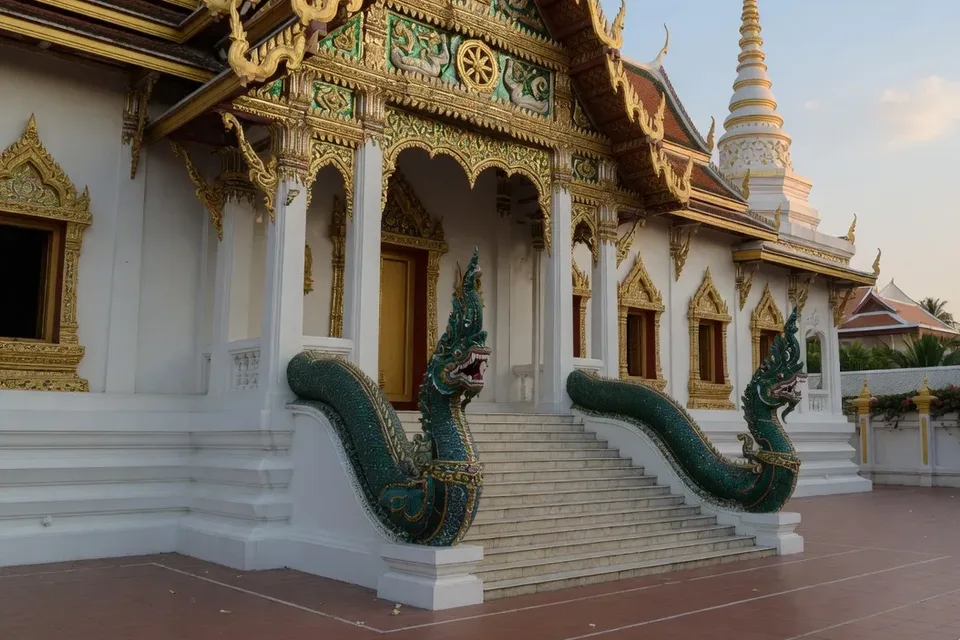
- Grand Palace, royal wats, processions: dress and conduct. Temple etiquette
Daily life
- Portraits in shops, homes, offices
- Royal anthem at 08:00 and 18:00 in some public spaces — people stop
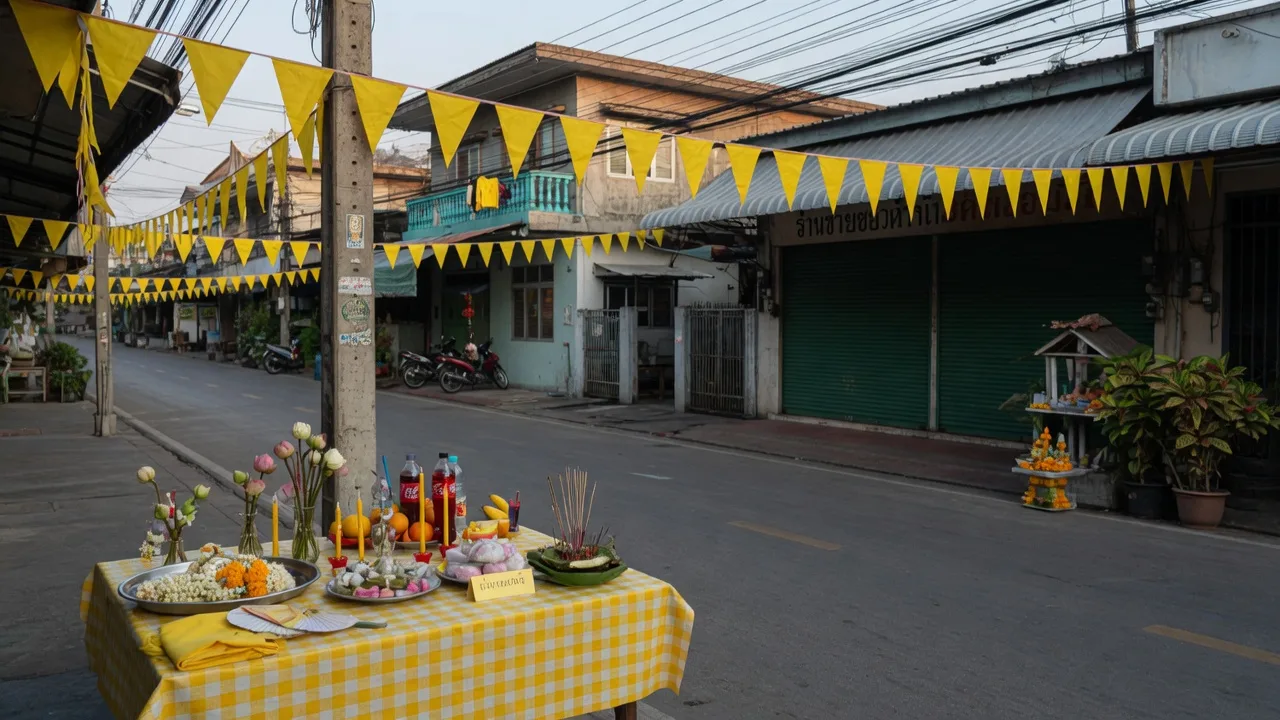
- Yellow is the late king’s colour (Monday birth). Yellow shirts on royal days
- Doi Kham juices and Royal Project vegetables on supermarket shelves are prestige, not just fruit
- Calendar: BE = CE + 543. 2569 = 2026. Thai calendar
Songkran 2026: 13–15 April. Loy Krathong 2026: 24 November. Neither is a licence to treat a royal portrait as a party prop.
Contemporary argument (handle with care)
The 2020–2021 student protests broke a long taboo by asking for reform: crown-finance transparency, 112 reform or repeal, clearer constitutional limits. Unprecedented, met with cases against leaders, still unfinished. Open talk remains legally risky. This page will not rehearse slogans. It will tell you that repeating them in a taxi is a poor experiment.
Royal birthdays and coronation-related days are public holidays. Substitution Mondays catch visitors who only checked the date. Banks close; 7-Eleven does not, except that alcohol follows the holy-day rules which are a different list. Thai calendar.
At the Grand Palace the king is architecture. At a cinema the king is a standing pause. On a ฿20 note the king is why you do not put your foot on the floor-change. Three registers, one rule: do not make it a joke.
A linen scarf and slip-on shoes get you through palace gates. Scarf listings are colour and size menus, so this stays a search. A compact umbrella is for the queue, not for pointing. Conduct gets you through the rest. Gateway: Bangkok, Visa & entry (the stamp is not a speech licence).
Highland royal projects — strawberries, Arabica, the stupas at 2,565 m — are how many northern visitors meet the late king without opening a history book. Land & Sea: Doi Inthanon. Pay the 300 THB gate; do not drone the chedi.
Next
Temple etiquette, Thai calendar, Modern Thailand, Thai social structure, Temple trail.