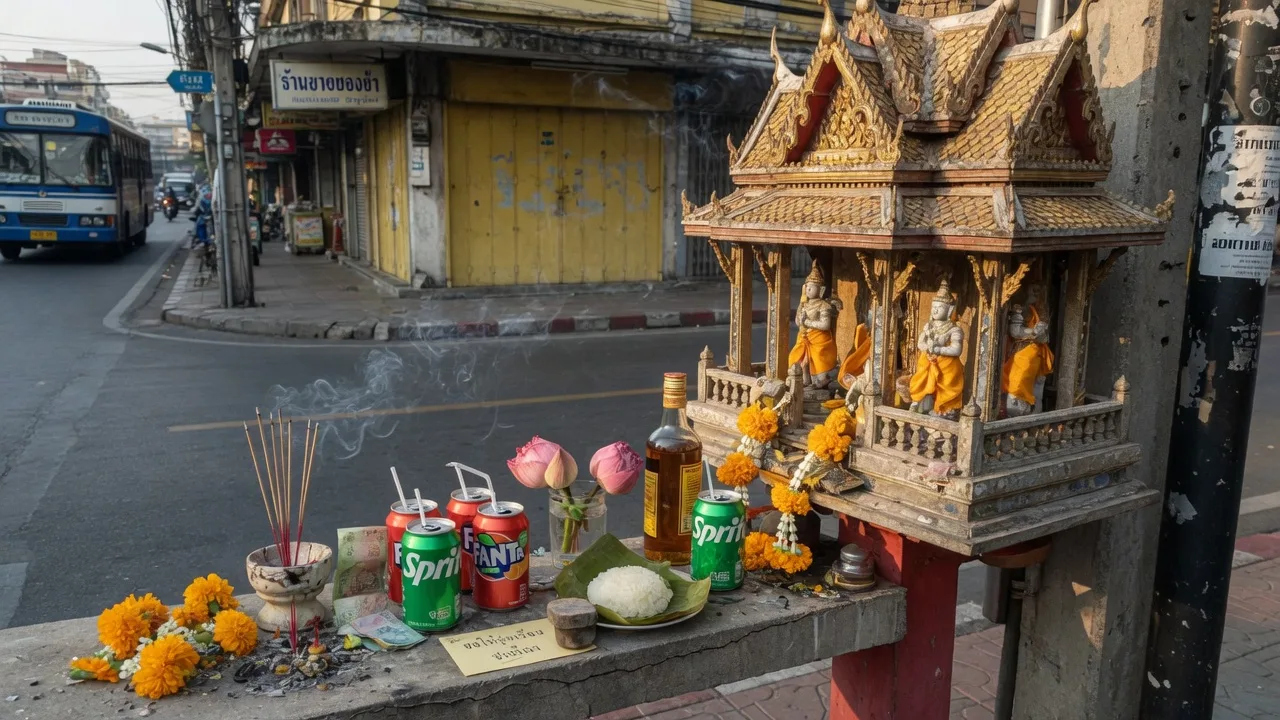
Visitors to Thailand quickly notice a curious feature of the built environment: nearly every building — from gleaming glass towers in Bangkok to wooden shacks in rural Isan — has a small shrine standing on a pillar in the grounds. These are spirit houses (san phra phum, ศาลพระภูมิ), miniature temples provided as residences for the guardian spirits of the land. They are offerings of real estate to the invisible world, and they reveal a dimension of Thai spiritual life that sits beneath, alongside, and thoroughly intertwined with Buddhism.
Thai Animism
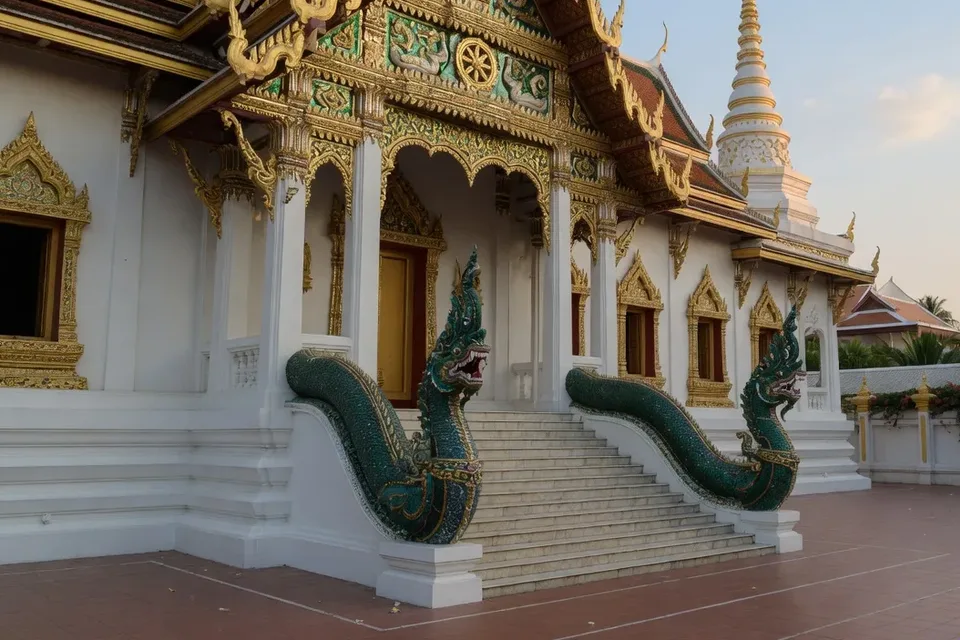
Thailand's deepest spiritual substrate is animism — the belief that spirits (phi, ผี) inhabit the natural world. Long before Buddhism arrived, the peoples of mainland Southeast Asia understood their landscape as alive with spirit forces in trees, rivers, mountains, rice paddies, houses, and crossroads.
Buddhism's arrival did not replace this worldview — it coexisted with it. Thai Buddhism is officially Theravada, but in practice it contains a rich layer of animist belief, Hindu cosmology, and Brahmanical ritual that scholars sometimes call Thai popular religion or folk Buddhism.
Types of Spirits (Phi)
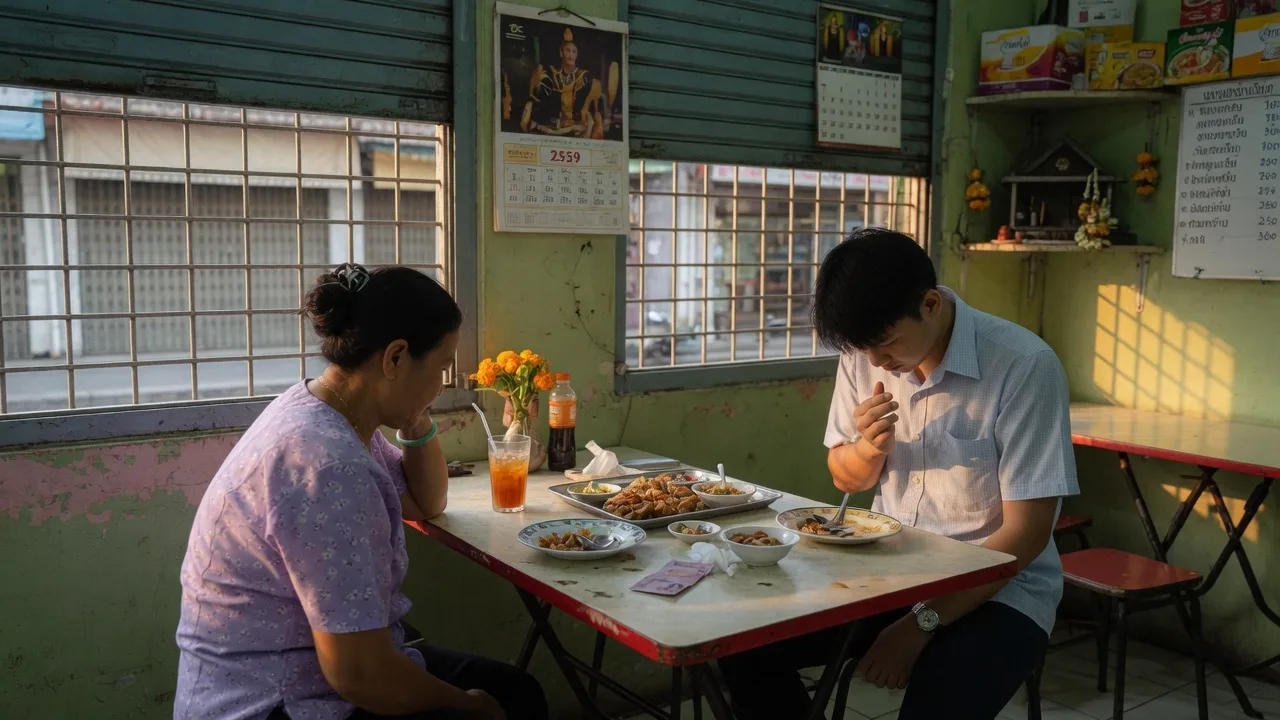
| Spirit | Nature |
|---|---|
| Phra Phum | Guardian spirit of a particular plot of land. Lives in the spirit house. |
| Phi Ruen | House spirit — protects the household. |
| Phi Pa | Forest spirits — can be benevolent or dangerous. |
| Phi Tai Hong | Ghosts of people who died violently or suddenly. Feared. |
| Phi Krasue | A floating head with trailing entrails — one of Thailand's most famous ghost archetypes, beloved in horror films. |
| Phi Pob | A possessing spirit, often blamed for mysterious illnesses. |
| Mae Nak | The most famous Thai ghost story — a woman who died in childbirth but continued to live with her husband, who didn't realise she was dead. Her shrine at Wat Mahabut in Bangkok receives constant offerings from Thais (and is a popular horror film subject). |
| Phi Phrai | Spirits of women who died in childbirth. |

The Thai attitude toward spirits is pragmatic rather than fearful — spirits are neighbours to be respected, placated, and negotiated with, not cosmic forces requiring worship.
The Spirit House
Purpose
A spirit house provides a dwelling for the guardian spirit of the land (phra phum). The logic is straightforward: when you build a house or building, you displace the spirit that previously lived on that land. You owe it alternative accommodation. If you neglect the spirit, it may become displeased and cause misfortune.
Design
Spirit houses resemble miniature Thai temples or, in more elaborate cases, royal palaces:
- San Phra Phum — The most common type. A small temple-like structure on a single pillar, typically at the corner of a property, positioned where the shadow of the main building does not fall upon it (the spirit house should not be "overshadowed").
- San Chao Thi — A simpler form, sometimes a small house for the earth spirit, placed lower or at ground level.
- Royal-style spirit houses — Larger properties may have elaborate multi-tiered spirit houses resembling Thai palaces, painted gold, with multiple figurines.
Placement
The spirit house is typically placed by a Brahman priest or spirit doctor (mor phi) who:
- Determines the auspicious location (considering the building's shadow, direction, and astrology)
- Selects an auspicious date and time for installation
- Conducts an invitation ceremony to invite the guardian spirit to take residence
- Places small figurines inside the spirit house representing the spirit, its servants, and animals (elephants, horses)
Daily Offerings
Thais place daily offerings at their spirit houses:
- Fresh flowers (jasmine garlands are most common)
- Incense (usually three sticks)
- Candles
- Food — small portions of rice, fruit, sweets, and sometimes a full meal
- Drinks — water, red Fanta (a surprisingly common offering — the red colour is thought to please spirits, replacing the traditional animal blood offering), Thai iced tea
- Coloured cloth — draped around the pillar
Offerings are typically refreshed daily, often in the morning before work. On important dates (Buddhist holidays, birthdays, before a journey), the offerings may be more elaborate.
When Buildings Change
If a building is demolished or renovated, the spirit house must be properly decommissioned:
- A new, appropriate spirit house must be provided
- The old spirit house cannot simply be thrown away — it must be retired to a spirit house graveyard, typically found at the base of a large tree at a temple. Walking through Thai temple grounds, you'll often spot collections of old spirit houses leaning against trees.
Famous Spirit Houses
- Erawan Shrine (Thao Maha Phrom/Brahma shrine, Bangkok) — Thailand's most famous public shrine. Built in 1956 to appease spirits after construction problems at the adjacent Erawan Hotel (now Grand Hyatt Erawan). Receives enormous daily offerings including hired classical dance troupes. A constant crowd of worshippers prays here around the clock.
- Chao Mae Tuptim Shrine (Bangkok, behind Swissôtel Nai Lert) — A fertility shrine famously adorned with hundreds of phallic offerings (lingam).
- Mae Nak Shrine (Wat Mahabut, Bangkok) — Dedicated to the beloved ghost Mae Nak. Young men about to be drafted into the army come here to pray, as Mae Nak's husband was a soldier.
Amulets
Thai amulets (phra khreung) are small Buddhist medallions, figurines, or objects believed to offer supernatural protection. The amulet trade is a multi-billion-baht industry and a deep obsession for many Thai men.
Types
- Phra pim — Clay or metal tablets pressed with Buddha images. The most common and widely collected type.
- Takrut — Rolled metal scrolls inscribed with sacred yantra formulas.
- Palad khik — Phallic amulets for luck, fertility, and business success.
- Jatukam Ramathep — Large medallions from Nakhon Si Thammarat that triggered a speculative craze in 2006–2007, with some rare pieces selling for millions of baht.
Consecration
Amulets gain their power through consecration by monks in elaborate rituals. The reputation of the monk, the age of the amulet, the circumstances of its creation, and its provenance all determine value. Rare amulets consecrated by famous monks can sell for tens of thousands — even millions — of dollars.
Amulet Markets
- Tha Phrachan market (Bangkok, near Thammasat University) — The most famous amulet trading centre. Hundreds of stalls, magnifying glasses everywhere, serious collectors examining tiny objects with almost scientific intensity.
- Amulet magazines, websites, and even dedicated smartphone apps serve a community of collectors who approach the hobby with the seriousness (and financial stakes) of rare coin or stamp collecting.
Tattoos (Sak Yant)
Sak yant (สักยันต์) — sacred geometric tattoos — sit at the intersection of Buddhism, Brahmanism, and animism:
- Applied by monks or ajarn (lay masters) using a traditional metal spike (khem sak) — hand-tapped, not machine tattooed
- Designs are based on yantra (sacred geometric diagrams) containing Pali text and Buddhist/Hindu imagery
- Each design offers specific protections: invulnerability, invisibility to enemies, charm, authority, protection from ghosts
- The most famous centre is Wat Bang Phra (Nakhon Pathom province), which holds an annual Sak Yant Festival where tattooed devotees reportedly enter trance states
Sak yant has gained international visibility through celebrities like Angelina Jolie (tattooed by Ajarn Noo Kanpai). For Thais, the tattoos carry genuine spiritual weight — they come with behavioural rules that must be upheld.
Spirit Mediums
Spirit mediums (rang song) continue to operate across Thailand:
- They serve as intermediaries between the human and spirit worlds
- Consulted for health problems, business decisions, missing objects, and relationship issues
- Often work from small shrines in their homes or at temples
- Some become locally famous and attract large followings
In the northeast, the phi fa spirit-medium tradition has Lao cultural roots and involves elaborate ceremonies with music and dancing.
The Invisible in Plain Sight
For visitors, Thailand's spirit culture is everywhere once you learn to see it:
- The jasmine garland on your taxi's rear-view mirror — protection
- The small shrine with the red Fanta bottle on the pavement — a spirit house for a demolished building
- The gold leaf pressed onto a Buddha image — a merit-making act
- The tiny figurines on the dashboard — amulets
- The tattoo visible on the monk's arm — sak yant, acquired before ordination
- The coloured strings tied around wrists — blessed by monks for protection
This is not superstition in the pejorative sense. It is a living cosmology — a way of engaging with a world understood as populated by forces that deserve acknowledgement. Thai Buddhism's genius lies in its generous accommodation of these beliefs, weaving animism, Brahmanism, and Theravada doctrine into a spiritual tapestry that feels, to most Thais, entirely coherent.