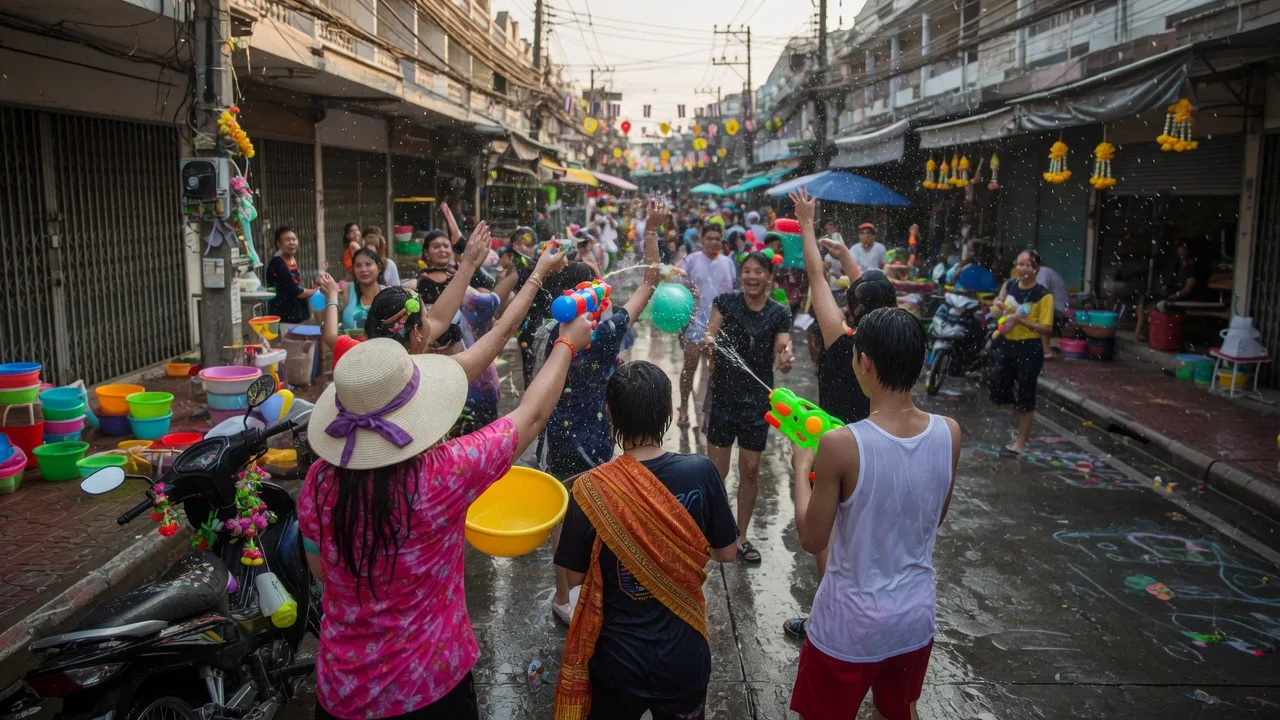
Songkran (สงกรานต์) is Thailand’s main annual festival: official holiday 13–15 April, traditional New Year, and the water fight the rest of the world booked a flight for. Under the Super Soakers: homecoming, elders, wats, a rinse of the year. UNESCO Intangible Cultural Heritage since 2023.
Songkran 2026 is 13–15 April. Cities, especially Chiang Mai, often run water extra days either side. Bangkok empties. Roads are the worst of the year. Buddhist Era: 2026 CE = 2569 BE (CE + 543). Thai calendar.
Origins
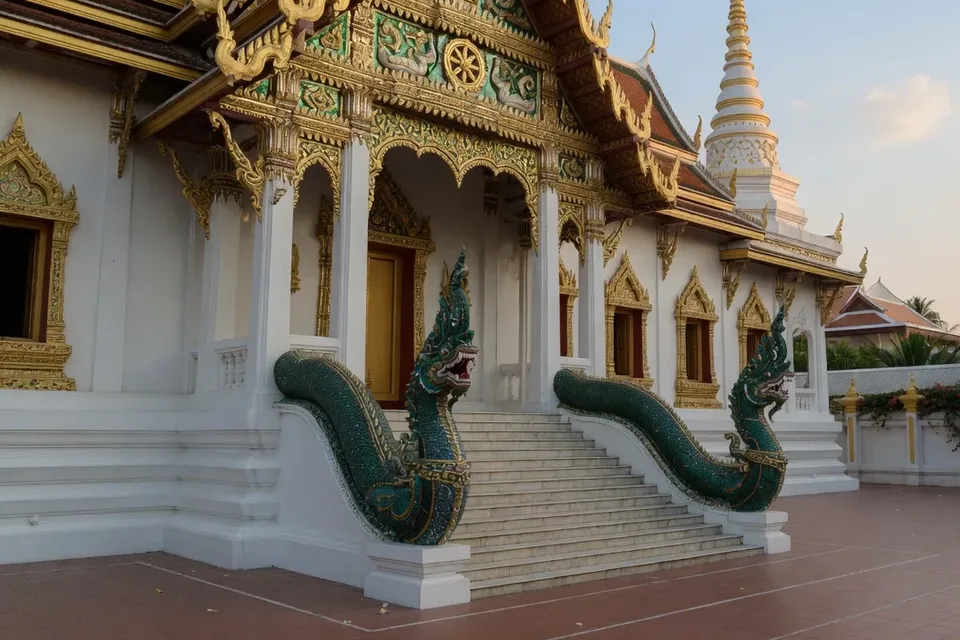
The name comes from Sanskrit saṃkrānti — the sun’s passage into Aries, a solar new year older than the nation-state. Water is purification, not originally a cannon. Neighbouring countries keep related new years; Thailand’s public version became the one that soaks strangers.
| Country | Name | Same April sky |
|---|---|---|
| Thailand | Songkran | 13–15 April 2026 official; cities add days |
| Laos | Pi Mai Lao | Same solar new year |
| Cambodia | Chaul Chnam Thmey | Same window |
| Myanmar | Thingyan | Same window |
| Yunnan Dai / some Tai groups | Water-splashing new year | Related, not a copy |
Hot season is not a coincidence. April is when the central plains sit near 40 °C. Banks, government offices, and many shops shut for the three official days; Bangkok empties toward Isan and the north. Gateway climate: When to visit. Land & Sea: Climate zones.
The three days
| Day | Name | What it is for |
|---|---|---|
| 13 April | Wan Sangkhan Long (Maha Songkran) | Last day of the old year. Houses cleaned. Public water starts. |
| 14 April | Wan Nao | Family. Merit at the wat. |
| 15 April | Wan Thaloeng Sok | New Year. Rod nam dam hua — water over elders’ hands. |
The quiet half
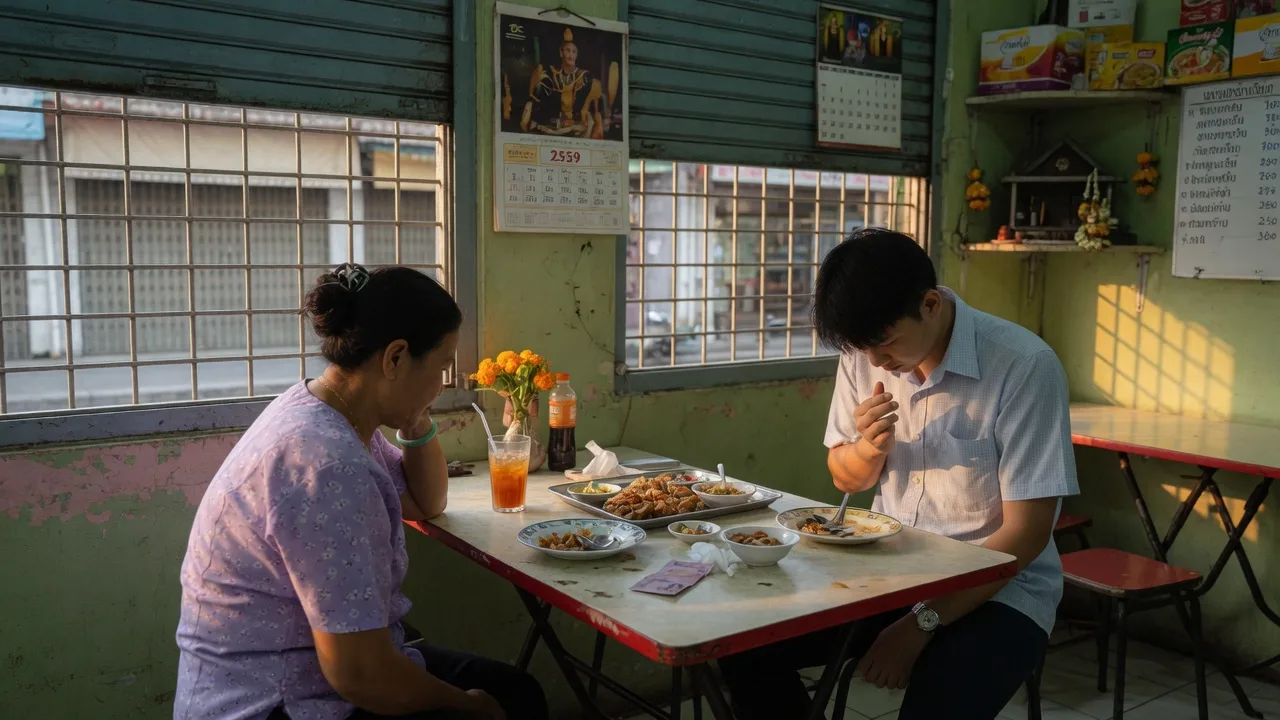
Rod nam dam hua: younger relatives pour scented water (jasmine, rose) over parents’ and grandparents’ hands, ask blessing and forgiveness, receive advice. This is the emotional core. It happens at home and at wats, not on Khao San.
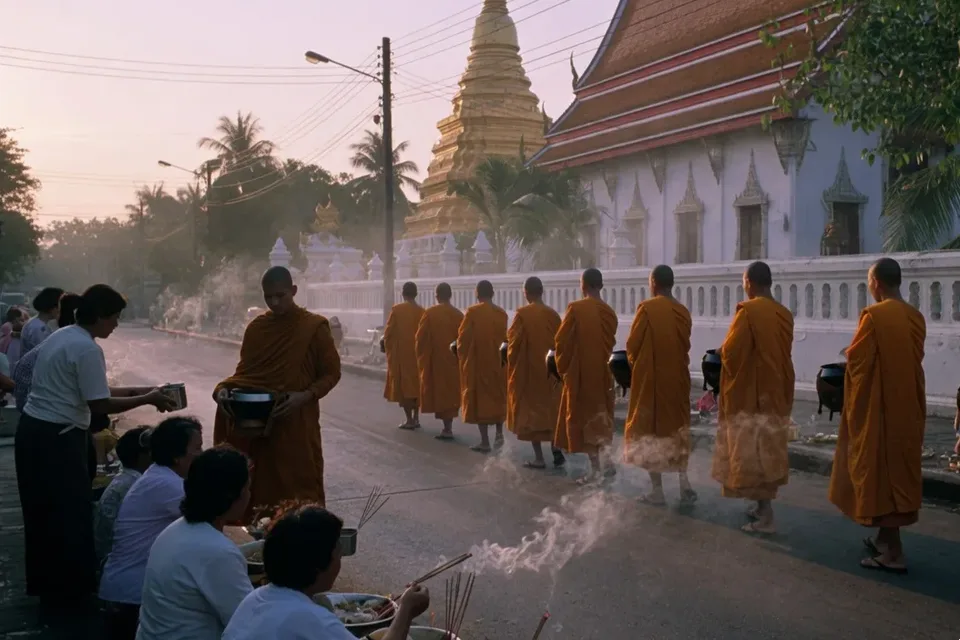
At the wat: food for monks; water poured over Buddha images, collected, used to bless family; sand chedis in the yard (returning the sand feet stole all year); birds and fish released for merit. Shoulders and knees still apply. Temple etiquette, Buddhism in Thailand.
Going home: Songkran is Thailand’s Christmas-scale migration. Coaches and trains book out weeks ahead. The government runs “7 Dangerous Days” campaigns — typically 11–17 April — because drink-driving and motorbikes spike. 2026’s official block is Monday 13–Wednesday 15 April. If you must travel, daylight, belt, no scooter heroics. Domestic flights fill; Suvarnabhumi on the 12th and 16th is not a bargain of time.
The water festival
Everyone in public is a target. Tourists, office workers, the person who thought a white shirt was a plan.
- Guns from pocket pistols to pump cannons, buckets, hoses, pickup trucks with barrels
- Ice water: effective, frowned on by people who remember the gentle version
- Talc paste on faces
- Music, foam, street stages
| Place | Character |
|---|---|
| Bangkok — Khao San | Tourist tunnel of water and foam |
| Bangkok — Silom | Biggest organised street party, stages |
| Chiang Mai | Often the best overall: old-city moat as battleground, extra days, ceremonies still happening |
| Sukhothai | Historical park, pageants, more rite than foam |
| Pattaya | “Wan Lai” — extra days, seafront (Pattaya) |
| Ayutthaya | Ruins, elephant water fights (controversial) |

Safety
- Roads — worst accident week of the year. Do not add yourself to the statistic.
- Electronics — a Fenteer dry bag, black, 10 litre or a zip-lock is not precious, it is the phone.
- Bags — pickpockets like crowds.
- Consent — water is universal; groping is not. Patrols have increased because it was a problem.
- Leave monks, elders, and people clearly opting out. The festival is not a licence.
UK exemption stamps were still 60 days in August 2026; TDAC still required. If you fly in for these three days, the stamp is the least of your packing. Visa & entry, Packing. A linen scarf for the wat hour; it will get wet anyway.
Food
- Khao chae (ข้าวแช่) — rice in jasmine iced water with elaborate sides (shrimp-paste balls, stuffed peppers, dried fish). Royal-hot-season dish, specifically Songkran.
- Pad Thai at the street parties because of course.
- Mango sticky rice — April is mango season. Table & Bazaar: Thai desserts, How to order.
Alcohol still follows shop windows and dry holy days are a different calendar; Songkran itself is not Visakha Bucha. Thai beer.
Land & Sea if you thought April was a beach month: Andaman is hot and still in season until the May close; Similans shut ~16 May 2026. Which coast.
Water, drought, and the morning that is not a fight
Official holidays 13–15 April 2026 (Monday–Wednesday). Cities often run extra splash days; Chiang Mai’s moat circuit is the version people mean when they say “the traditional one.” Khao San and Silom are the Bangkok party maps. Pattaya’s Wan Lai often runs later in the month — check the year’s municipal dates.
April is peak dry. The water fight is real; so is the agricultural calendar that is praying for rain. Fill a gun from the barrel the stall sold you, not from a temple trough. Morning merit — bathing Buddha images with scented water, paying respect to elders — happens before noon in many families. That is still Songkran. The afternoon hose is the public face, not the whole rite.
Phones die. A dry bag in the daypack is more use than a new camera. Modest dress still applies if you walk into a wat between fights. Temple etiquette. Alcohol on the street is a local-permit question, not a holy-day dry rule; shop hours still apply.
Next
Thai calendar, Loy Krathong, Temple etiquette, Buddhism in Thailand, When to visit.