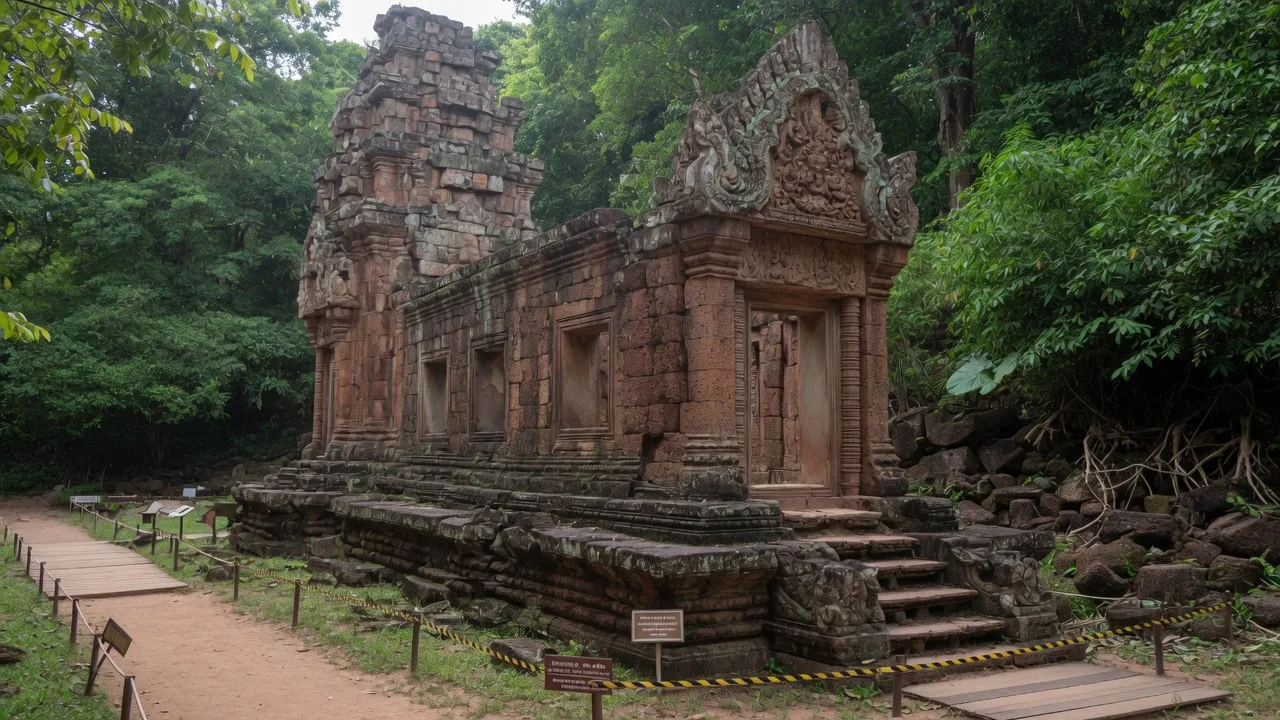
The land has been occupied on the order of 40,000 years. Long before Tai-speaking peoples moved down from Yunnan, this territory held cultures that traded with India and China, built temples, and — at Ban Chiang — worked bronze as early as anywhere. “Thailand” is a late label. The ruins are not.
Walk them with shoulders covered. Temple etiquette. Gateway days: Temple trail, Ayutthaya.
Tai-speaking groups did not arrive into empty land. Dvaravati (Mon, roughly 6th–11th centuries) left laterite and Buddhist sculpture in the Chao Phraya basin. Khmer administration ran deep into what is now Isaan and the central plain — Phimai and Phanom Rung are the buildings you can still walk. Sukhothai (13th century) is the origin myth Thai schoolbooks start with; Ayutthaya (1351–1767) is the maritime empire that actually paid for the gold. Thonburi and then Bangkok are the recovery after the Burmese sack. That sequence is a classroom sketch. The bricks on the ground are messier, and worth a day without a hologram show.
Prehistory
Ban Chiang
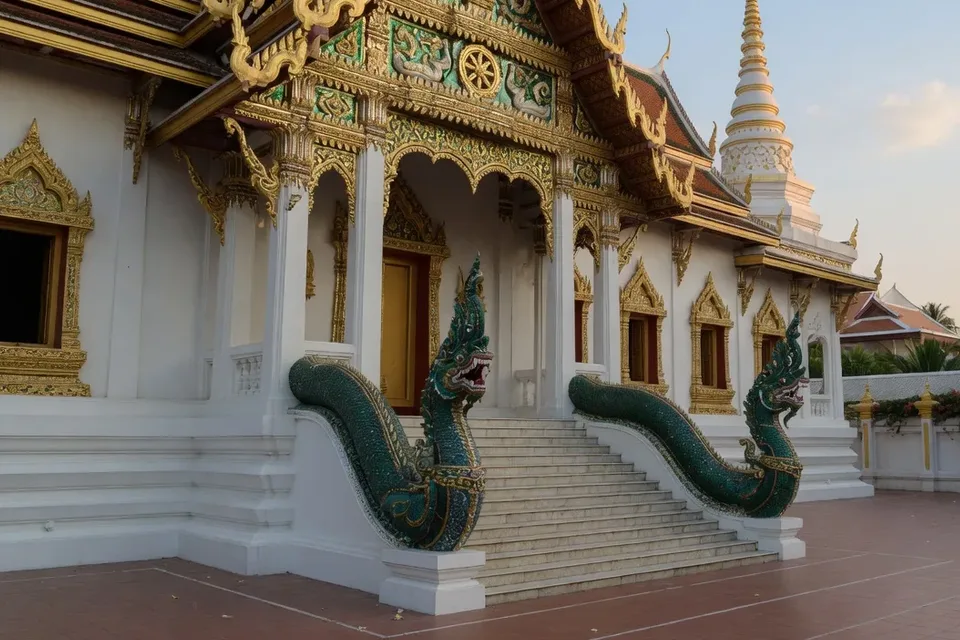
Udon Thani, UNESCO 1992. Bronze from about 2100 BCE — among the world’s earliest, contemporary with Near Eastern bronze, which is why the site annoyed diffusion-from-the-West models. (Some later papers argue a younger bronze; the pottery and rice are not in dispute.) Painted red-on-buff ware. Start at the site museum, not at a looted pot in a café. The village is still a village.
Spirit Cave
Mae Hong Son. Plant use and tools from about 9000 BCE — early agriculture-adjacent life in the hills. Mountains and highlands.
Hariphunchai
Mon kingdom centred on Lamphun, traditionally founded by Queen Chamadevi, absorbed by Mangrai when he took the north for Lanna (1281/1292 depending on the chronicle). Wat Phra That Hariphunchai is the standing argument that the north was Mon-Buddhist before it was Lanna. The ku (reliquary) and the town’s moat still read as that layer.
Indianised kingdoms
From roughly the 1st to 13th centuries CE, Indian religion, Sanskrit, art, and divine kingship shaped the map. Not colonies. Not “India with humidity.” Local states using a shared prestige language.
Dvaravati (6th–11th c.)
Mon-speaking, Theravada, city-states around Nakhon Pathom, Lopburi, U Thong — a network, not one empire. Rounded Buddha faces, stone Dhammachakra. Phra Pathom Chedi sits on a Dvaravati stupa; the tower you see is later, often cited at 120.5 m (sometimes 127 m depending what is counted). Khmer pressure ended the system.
Srivijaya (7th–13th c.)
Sumatran maritime power on the Strait of Malacca, reaching southern Thailand. Nakhon Si Thammarat as outpost, later a Buddhist centre. Chaiya near Surat Thani: Phra Borom That Chaiya, one of the finest pre-Thai monuments still standing.
Khmer Empire (9th–15th c.)
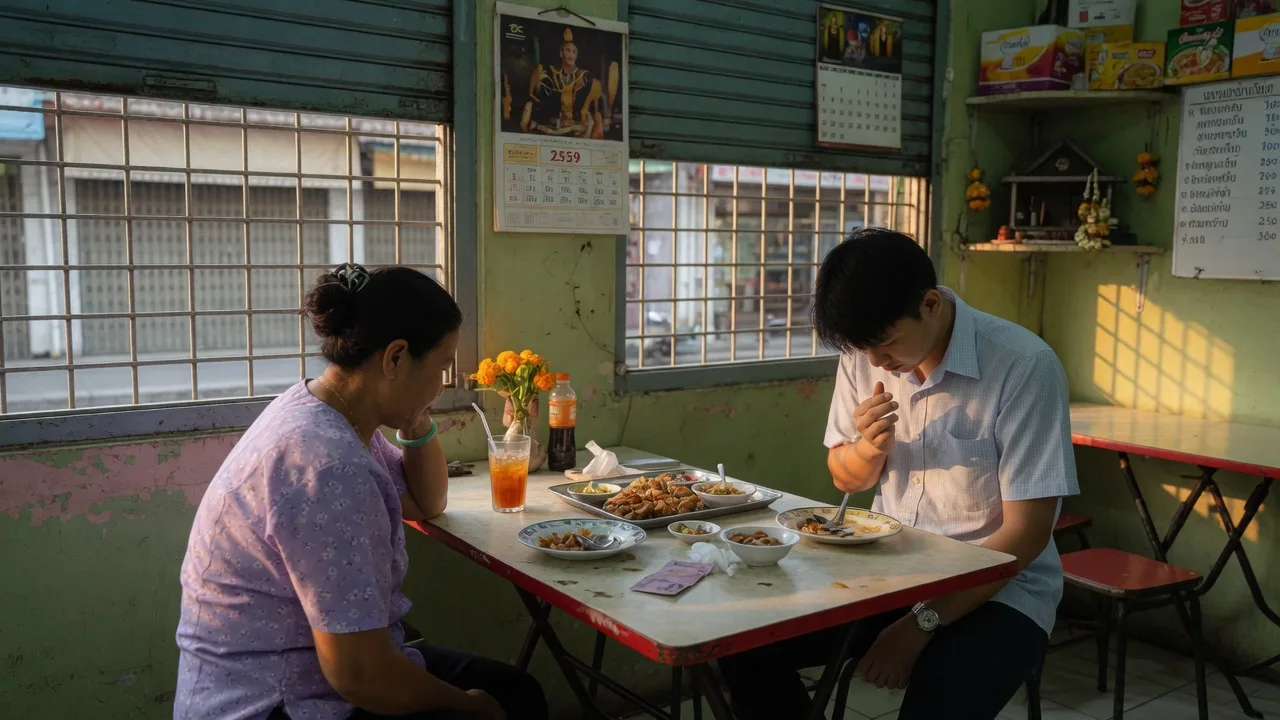
Angkor’s reach:
- Phimai (Nakhon Ratchasima) — 11th–12th c. sandstone, a 225 km royal road to Angkor
- Phanom Rung (Buriram) — Hindu, volcano rim, equinox sun through 15 doorways. The alignment is around 13 April, which is also Songkran — book the year you care about; the park does not hold a private viewing for your sunrise.
- Muang Tam — lotus reservoirs
- Lopburi — Prang Sam Yot — laterite towers, now macaques. Gateway day: Temple trail
- Phanom Wan — sandstone near Korat
Lasting exports into Thai court culture: devaraja (divine kingship), royal titles, Hindu myth inside Buddhist ceremony, the prang. Thai art and architecture, the monarchy.
| Site | What to know |
|---|---|
| Ban Chiang | UNESCO, bronze, pottery — museum first |
| Phra Pathom Chedi | Tallest Buddhist monument class; Dvaravati under later brick |
| Phimai / Phanom Rung | Finest Khmer in Thailand; modest dress anyway |
| Prang Sam Yot | Monkeys steal food; November Monkey Banquet |
| Phra Borom That Chaiya | Srivijayan proportions, south |
| Hariphunchai / Lamphun | Mon layer under Lanna; easy from Chiang Mai |
| Phanom Rung equinox | ~13 April; 15 doorways; Hindu on a volcano rim |
Phimai’s sanctuary is Mahayana Buddhist in much of its iconography, not a Hindu copy of Angkor Wat. The 225 km royal road to Angkor is the infrastructure fact: this was a connected empire, not a scatter of pretty laterite. Modest dress on sandstone as on a Bangkok wat. Temple etiquette.
Tai arrival, Sukhothai, Lanna
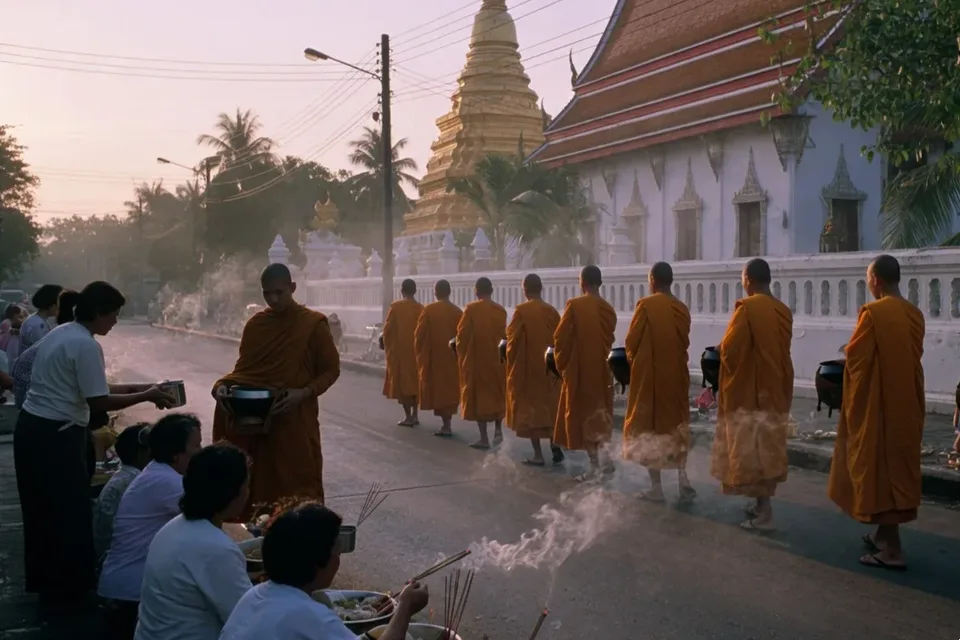
Tai peoples filtered south from Yunnan over centuries, into Mon and Khmer lands by the 10th–12th centuries, taking Buddhism and Khmer admin and making something else. When Angkor weakened, chiefs founded states. Schoolbook year for Sukhothai: around 1238. Sukhothai era.
Lanna (1292–1558) is the corrective: King Mangrai, capital Chiang Mai 1292, lasted longer than Sukhothai-as-independent-kingdom. Own script (Tham Lanna), own roofs, Theravada scholarship, Burmese conquest 1558, on-and-off until Bangkok absorbed the north in the late 18th century. The identity remains: dialect, food, Yi Peng lanterns with Loy Krathong (24 November 2026). Chiang Mai.
Ayutthaya is the next empire-scale chapter: Ayutthaya Kingdom. Then Bangkok: Modern Thailand.
Visiting without flattening the timeline
Khmer sandstone is not “ancient Thai” in the ethnic sense. It is Khmer, on land that is now Thailand. Dvaravati is Mon. Srivijaya is a maritime world. Sukhothai is where the national story likes to start. All of these can be true in one week if you do not need them to be one brand.
Cash at site booths. Heat on brick is worse than Bangkok pavement. Compact umbrella — Fulton Tiny 1 B002PHM6BC is a colour menu, so this stays a search — linen scarf, slip-ons. Macaques at Lopburi: do not feed. Land & Sea if you pair ruins with a park: Khao Yai is 400 THB and 3 hours from Bangkok — Khao Yai.
| Site | From Bangkok | Layer |
|---|---|---|
| Phra Pathom Chedi | ~1 hour | Dvaravati under later brick |
| Prang Sam Yot, Lopburi | ~2 hours | Khmer laterite; monkeys |
| Phimai | ~3.5 hours | Khmer, royal road to Angkor |
| Phanom Rung / Muang Tam | ~5 hours | Hindu volcano-rim; lotus barays |
| Sukhothai Historical Park | ~6 hours / overnight train | First Thai kingdom in the schoolbook |
| Hariphunchai, Lamphun | Via Chiang Mai | Mon, then Lanna |
| Ban Chiang | Via Udon Thani | Bronze, pottery, UNESCO 1992 |
| Chaiya | Via Surat Thani | Srivijayan |
Do not collect laterite. The museum shop is the legal souvenir.
Next
Sukhothai era, Ayutthaya Kingdom, Thai art and architecture, Temple trail, Ayutthaya.