People & Spirit is temples, the calendar, social rules, arts, festivals, and the monarchy as an institution — in the Thailand InfoBuffoon network. It is written for visitors who want the wat and the unsaid rule to make sense before they walk in.
What you will find
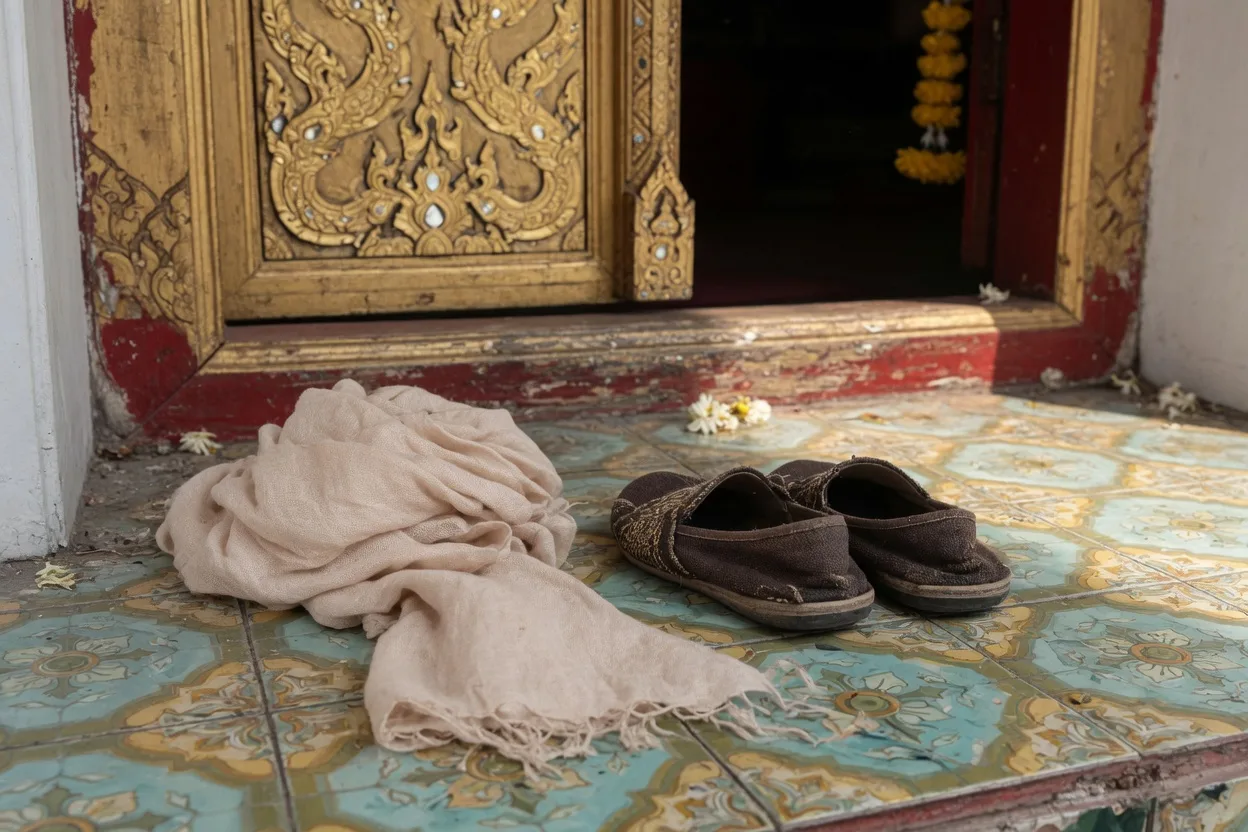
Temple etiquette is practical: shoulders, knees, shoes, soles of the feet, monks, cameras. A scarf is a tool. A Buddha image is not a prop.
Festivals are dated. Songkran 2026 is 13–15 April. Loy Krathong 2026 is 24 November. Buddhist Era is CE + 543 (2026 = 2569 BE). Lunar holy days move; check a current sheet rather than a 2014 blog. Songkran, Loy Krathong.
Kreng jai is a social habit, not a fun fact. The monarchy is described as an institution, not as a comments-section sport. Alcohol dry days on major Buddhist holy days are reported, not moralised.
Travel and entry live on Gateway. Coasts and parks live on Land & Sea. Food and markets live on Table & Bazaar.
Who publishes this site
Tabaconda LLC, Florida, USA. Independent niche sites — not a tourism board, not a temple committee, not a festival promoter.
People & Spirit is the culture guide in the Thailand InfoBuffoon set. This one is the wat, the calendar, and the rule you will not find on a boarding pass.
How we write
We describe what a visitor will actually meet. We date facts that move. We refuse two cheap tones: the brochure that calls everything “spiritual”, and the explainer that treats Thai religion as a costume.
Kit searches (a linen scarf, slip-on shoes) are optional Amazon UK category links for the actual tool at a palace gate. They are not why a wat is in the article. See Affiliate disclosure.
We will not flatten kreng jai into “Thais are too polite, so insist”. We will not treat every festival as a colour run. We will not crowd-source takes on the royal family.
History pages exist because Sukhothai, Ayutthaya, and Bangkok are not the same city with different fonts. A ruin is still a wat in the way that matters for your feet and your camera.
The wat and the calendar, without the folklore
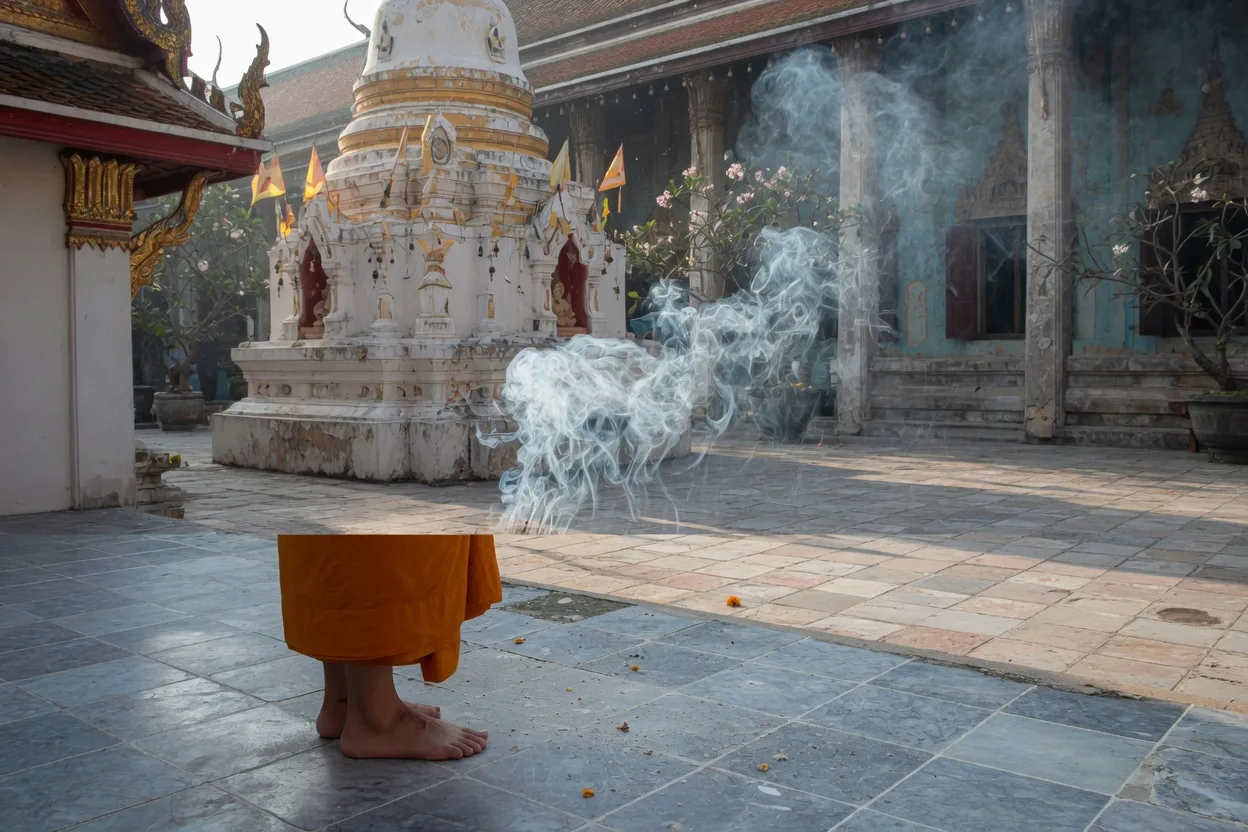
Cover shoulders and knees. Shoes off at the hall. Sit so the soles of your feet do not point at an image. Women do not hand objects directly to monks. Inner halls often forbid photos. None of that is Instagram styling.
Songkran is solar New Year with a water fight in the afternoon and merit in the morning. Showing up only for the buckets and treating the morning as optional is a choice; it is not the whole holiday. Loy Krathong is a full-moon night on the water. Buddhist holy days shut the beer fridge at 7-Eleven; ordinary moon days fill the wats. The Buddhist Era year is the Western year plus 543.
Kreng jai is not “Thais will not say no, so push.” It is not wanting to impose. Make small requests, ask privately when the answer could embarrass, accept the second offer of water. A loud complaint in a queue is not “being direct”; it is a scene.
The monarchy is a legal and social fact of the country you are visiting. Lèse-majesté is statute. A sarcastic caption is not “just Twitter”. Delete the photo. Do not wear a Buddha as jewellery on a beach. Do not climb a chedi for a better angle.
Muay Thai is a sport with a ticket window, not a metaphor you need to perform. Arts pages exist so you can look at a building or a bout without inventing a meaning that was not offered.
What we will not do
We will not write “do as the locals do” as if locals were a single person. Bangkok, Isan, and the south do not share one etiquette script. We will not pretend a neighbourhood shrine and the Grand Palace have the same ticket and the same patience.
We will not turn every monk into a portrait session. We will not recommend a blessing as a souvenir. We will not tell you the king is “just like our royals, only more so”.
Where Gateway already has the visa, or Land & Sea already has the park that contains a wat, we link rather than reprint.
Corrections
If a festival date, a dress rule, or a monk-etiquette note is wrong: Contact. Name the page. A gazette, a notice, or a dated photograph of a sign is the useful correction. Lunar dates move; if we froze one, say so.
Related reading
- Travel and entry: Visa and entry, Etiquette
- Coasts and parks: Land & Sea
- Food: Table & Bazaar
- Start on this site: Temple etiquette, Thai calendar, Buddhism in Thailand